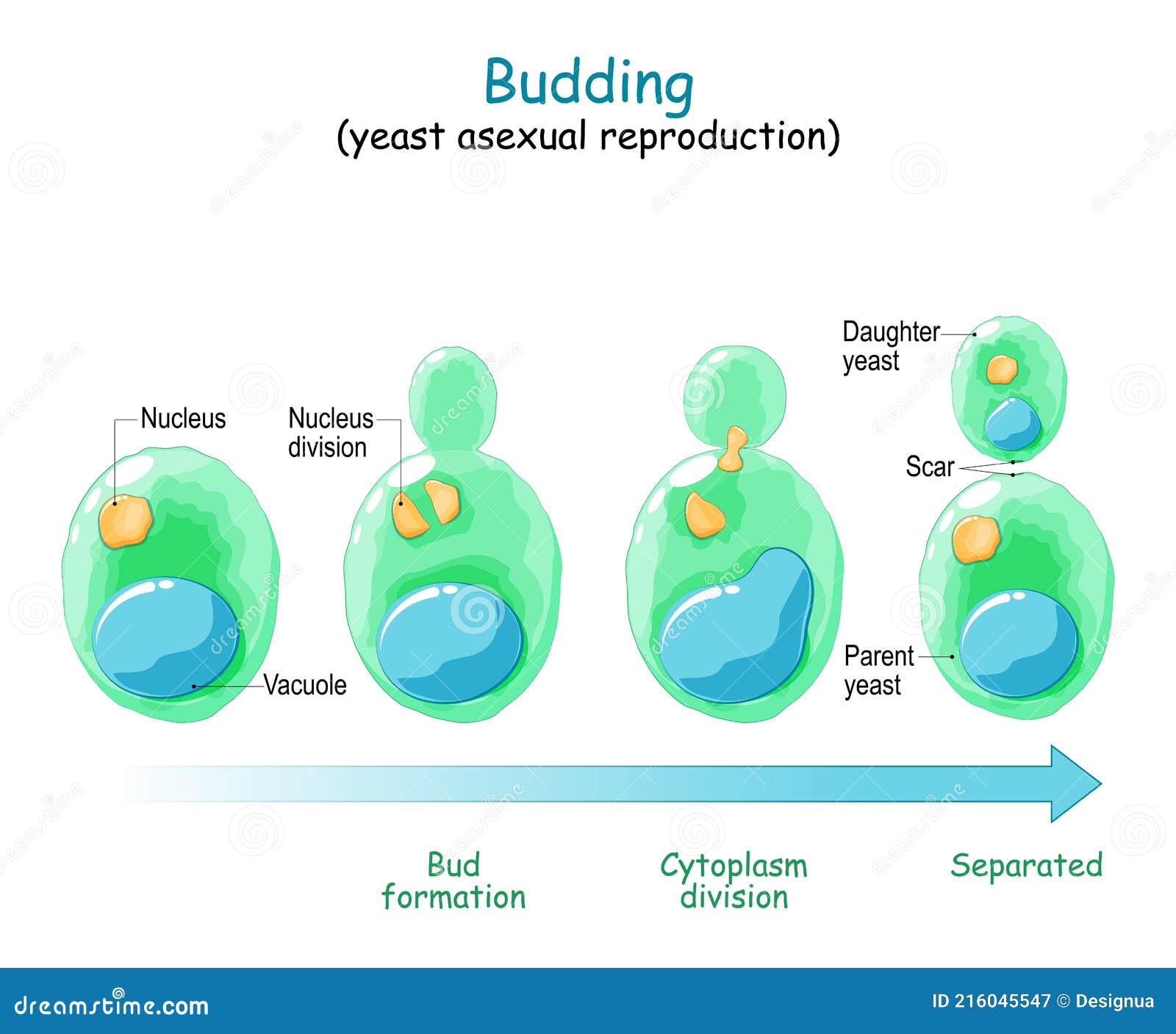
Is Budding Asexual Reproduction Of Yeast Cell Stock Vector Illustration Of Olated Science
Start Today is budding asexual reproduction elite watching. No wallet needed on our visual library. Step into in a comprehensive repository of documentaries made available in HDR quality, essential for discerning viewing admirers. With contemporary content, you’ll always have the latest info. Locate is budding asexual reproduction preferred streaming in sharp visuals for a genuinely engaging time. Participate in our media world today to check out unique top-tier videos with without any fees, access without subscription. Get access to new content all the time and venture into a collection of unique creator content crafted for deluxe media aficionados. Don't pass up singular films—get it in seconds! Explore the pinnacle of is budding asexual reproduction special maker videos with stunning clarity and select recommendations.
Budding, in biology, a form of asexual reproduction in which a new individual develops from some generative anatomical point of the parent organism Whether in yeast, hydra, or plants, budding allows organisms to quickly and effectively increase their population without the need for genetic recombination. In some species buds may be produced from almost any point of the body, but in many cases budding is restricted to specialized areas.
Budding Asexual Reproduction In Plants
Budding or blastogenesis is a type of asexual reproduction in which a new organism develops from an outgrowth or bud due to cell division at one particular site. Budding is a fascinating and efficient mode of asexual reproduction that ensures the rapid propagation and survival of species Budding is a mode of asexual reproduction where a new organism develops as an outgrowth from the body of the parent organism
Learn how budding occurs in bacteria, fungi, protozoa, hydra, and plants, and compare it with binary fission.
Definition of budding budding is a type of asexual reproduction Budding is the formation of an individual daughter from a small bud on the parent's body The newly developed progeny produced by this method are genetically and morphologically homologous to the parent organism During budding, a cytoplasmic disruption takes place in the basal area of the parent body and results in the.
Budding is a form of asexual reproduction developing a new individual from the same generative anatomical point of the parent organism restricted to specialized areas However, in some cases, buds can be produced from any point of the body The budding process is observed in various organisms of different species, like fungi, algae, hydra, and some species of coral Asexual reproduction involves producing progeny that are genetic clones of the parent
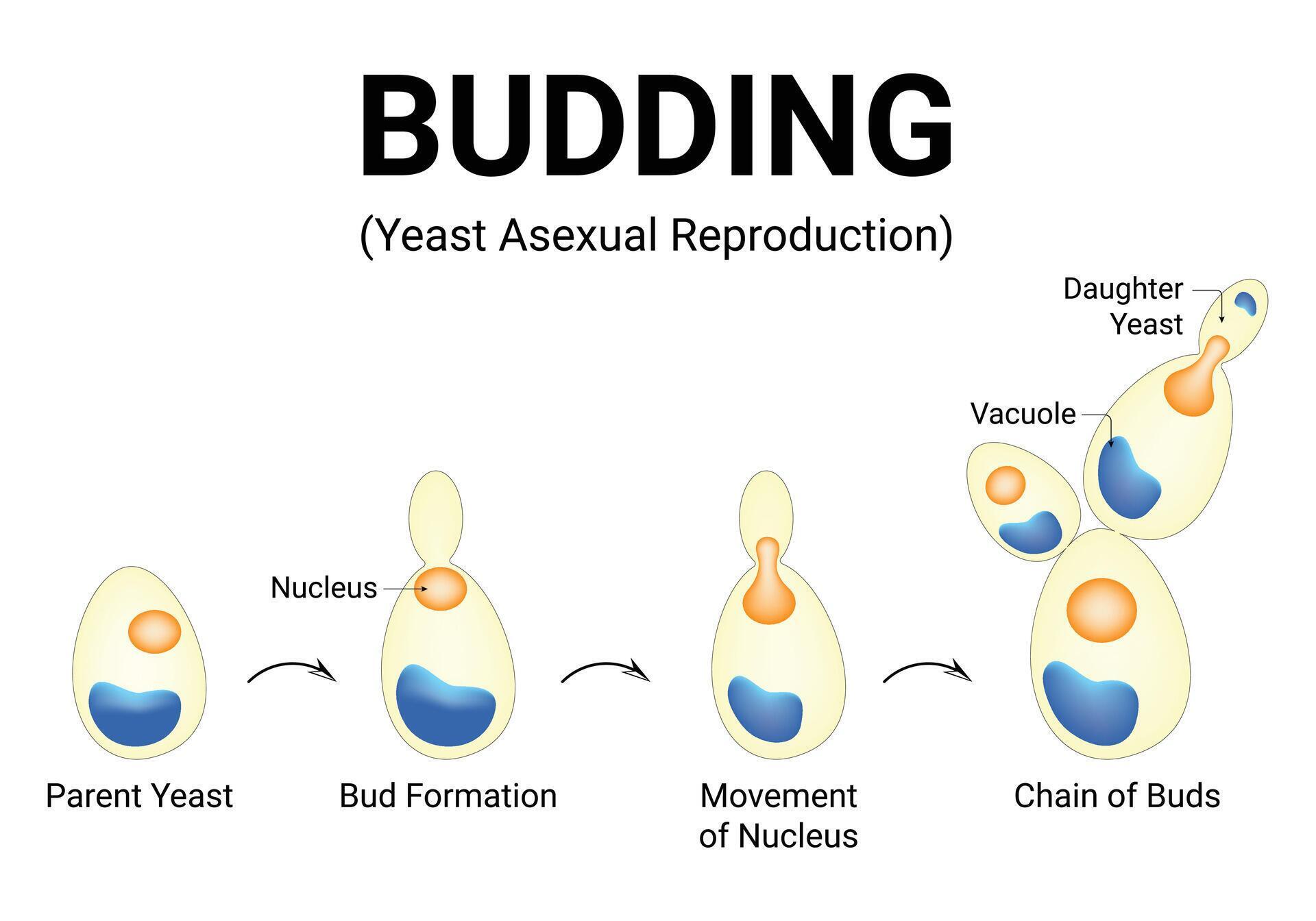
This can be done by regeneration, budding, and binary fission.